
Why Dress-Up Play Matters
What children actually get out of dress-up play, and why a costume on a hook beats one in a box Part of the Funna wardrobe of princess dress costumes.
A princess dress is not a toy in the usual sense. It does not do anything on its own. What it does is give a child permission to be somebody else for an afternoon, and that is a surprisingly large piece of machinery to hand over for the price of a dress.
Pretend play is practice
When a child puts on a gown and starts holding court, she is rehearsing things that are hard to practise any other way: giving instructions, taking a role, negotiating who is queen and who is not, and staying in character when somebody breaks the rules. Educators call this symbolic play. In a living room it looks like an argument about who gets the wand, and it is doing the same work either way.
Costumes let a child explore a personality
A shy child in a crown is often not a shy child. The costume gives her a reason to speak up that is not about her, and that distance is the whole point. It is also why children will wear one dress every single day for a month and then abruptly stop: the role has been explored, and the dress goes back on the hook until a new story needs it.
Keep it where she can reach it
The single biggest factor in how much a dress-up outfit gets worn is whether a child can get it herself. A gown in a box on top of a wardrobe is a special-occasion object. The same gown on a low hook by the door becomes an everyday one. I would rather own two dresses that live on hooks than six that live in a box.
What to buy first
A plain princess dress with no story attached is the best first purchase, because it can be anything. After that, buy the specific one the child keeps asking for by colour. Accessories matter more than adults expect — a crown, a wand and a pair of gloves extend the imaginative range of a single gown considerably, which is why the Funna listings that include them tend to be the ones that get worn to pieces.
Two people, one game
Matching dress-up for a grown-up and a child changes the game rather than doubling it. A parent in costume is in the story instead of watching it, and children notice the difference immediately. It is the most reliable way I know to be invited into a game instead of having to ask.
Dresses people read this one for
-
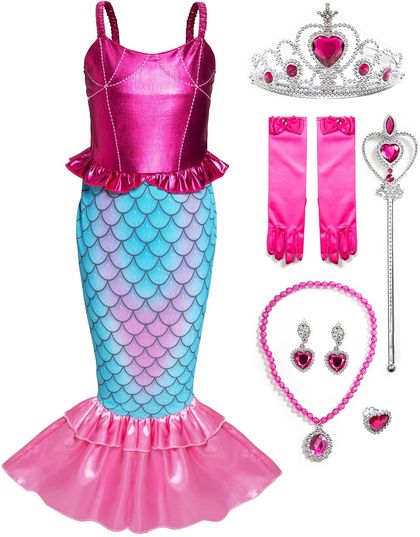
Pink Little Mermaid Costume for Girls
Sizes: 3T, 4T, 5T, 6 Years, 7-8 Years
$19.97
-
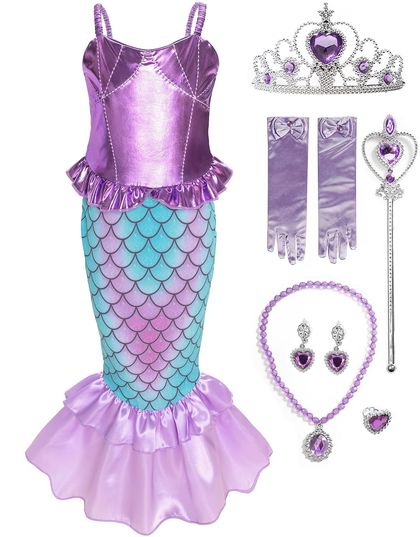
Purple Little Mermaid Costume for Girls
Sizes: 4T, 5T, 6 Years, 7-8 Years
$19.97
-
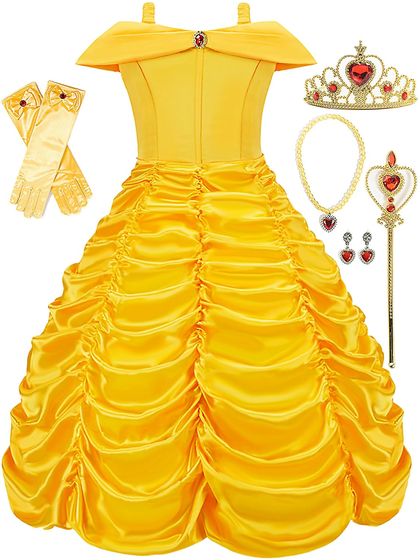
Yellow Layered Princess Dress with Off-Shoulder Sleeves
Sizes: 4T, 5T, 7 Years, 8 Years
$19.95
-
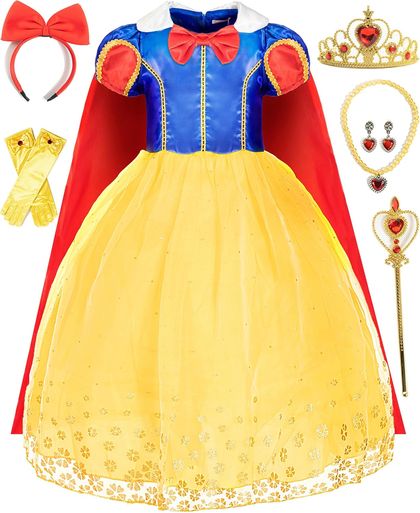
Princess Dress Costume for Toddler Girls with Accessories
Sizes: 3T, 6-7 Years, 8 Years
$19.95
Where this sits among the Funna princess dress costumes
These are costumes, not everyday clothes, and the difference is the whole point. A school dress is designed to survive a term; a princess dress for girls is designed to survive a birthday. Knowing which you are buying saves disappointment later, so every card I collected says plainly how the fabric feels, how the sizing runs, and how beautiful it does or does not look once it is on a moving child.
What a gown is really for is the pretend hour. The kingdom gets built on the stairs, the queen gives orders to the cat, and a personality nobody has met before explores the hallway. Dress-up play of that sort feeds imagination better than most toys, and it does not stop at Halloween — birthday parties and ordinary enchanted afternoons take the magical part just as seriously.
I run this desk without ads. If one of the styles you remember is missing, the listing went away — that is the only reason anything leaves. Find the size, have fun, and let imagination fill in whatever the photograph does not show.
The five shelves: Princess Dresses for Girls (5) · Mermaid Costumes for Girls (3) · Mommy and Me Costumes (2) · Princess Costumes for Women (4) · Halloween Costumes for Women (9).